| Date of Report: Sunday, 6th September 2026 |
|
Name: Roger Gurr Email: allclean@mweb.co.za Phone: 082 464 6350
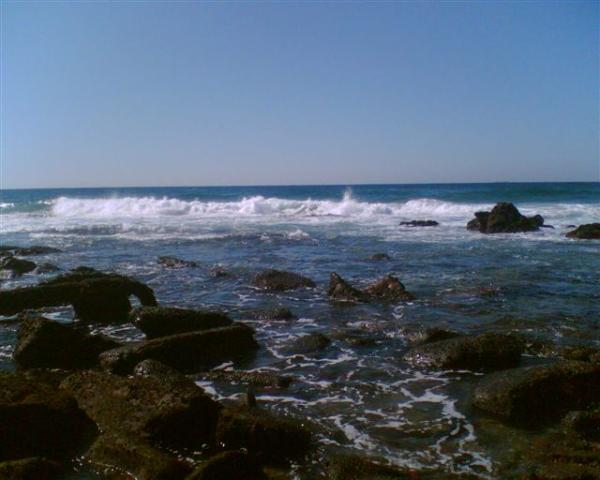
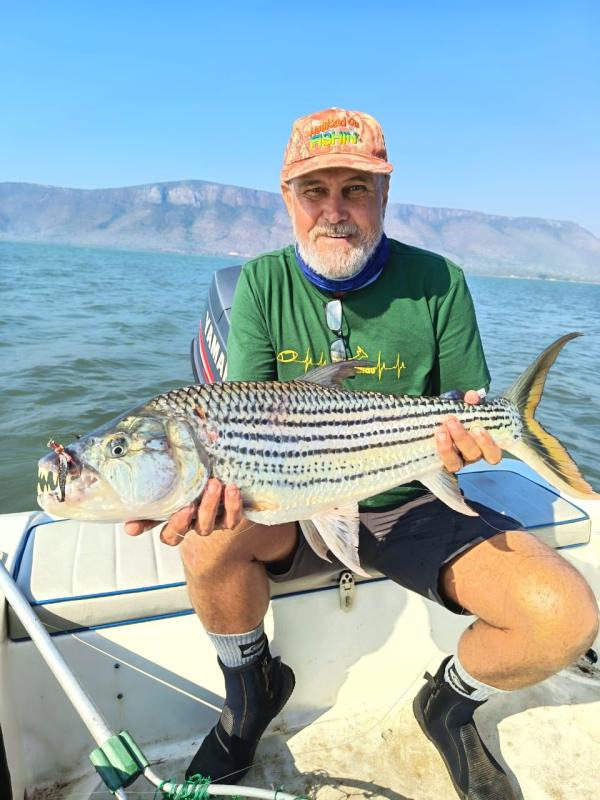
Good day and welcome to the Upper South Coast Fly Fishing Today it is cold and wet with drizzle on and off, so I guess just the right kind of weather to remain indoors and do my fly-fishing report which if I am honest, I have been putting off a while. Anyway, over the past month or so I only fished once at Scottburgh in front of the caravan park and worked my way south towards Park Rynnie. Conditions were nice and sunny with an east wind of 15 to 20 kilometres an hour, fortunately from the northeast which makes casting easy for me as a right-handed person. {no back casting} The area is lovely with lots of holes, gullies and in places nice, protected water. It’s a shallow water area with water depths between 30cm to roughly one metre, so an intermediate line and straight 7 kg. leader perfect for the conditions. Fishing was slow and I only managed one Ladder Wrasse. However, working my way between the gullies and rock pools I was so pleased to see the marine life was good with so many small fingerlings, crabs, sea urchins and I videoed what looked like a sea snake in a small gully which was later identified as a Floral Moray eel I am77 and this is the first one I have ever seen one, so we never stop discovering and learning. Other than that Marius, a friend has fished the Warner Beach and Illovo River area and caught Shad and Wave Garrick on fly. I am sure that if we spend more time and effort along the beaches and rocky areas we will find more fish and species. Weather conditions have varied from time to time with beautiful sunny calm days or days when the wind is trying to sand blast the skin off you and sea conditions have matched the winds. Conventional fishermen have been catching Shad and Garrick frequently all along the upper south coast from Umgeni River mouth to Scottburgh and Brusher have been seen by spear fishermen. I have not fished Durban harbour mainly because of the threat of my Bakkie disappearing whilst I am out on the water. I need to find a safe place to park it. Previously I used to park and launch form Point Yacht CIub, so perhaps joining the club again will be worth the expense. Regarding vehicle theft, someone tried to steal my bakkie last Thursday, but fortunately, I have an antitheft/hiacking device which isolates all the electrics and computer so they were not successful except for the cost of the repairs. Jozini Dam which naturally is nowhere near the upper South Coast, but I include it with this report because Marius Groenewald one of our members spent two weeks there in early August fly fishing for Tiger fish and had great success with the largest Tiger measuring 68cm. Fritz de Koker fished the south pier and had some success with Black Tail, Wrasse, Shad and a few Needle Scale Queen Fish and a few nice Perch and small Kob at Umgeni River mouth. That's all for now folks with spring on the way l'm hoping for warmer weather and some bigger fish.
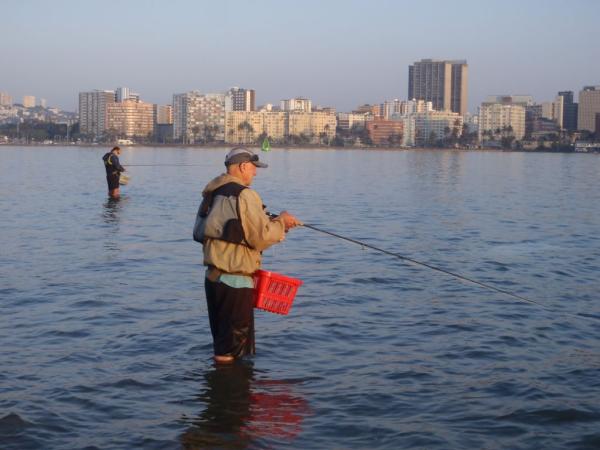
Durban harbour
Rainbow wrasse water
Jozini tigerfish. |